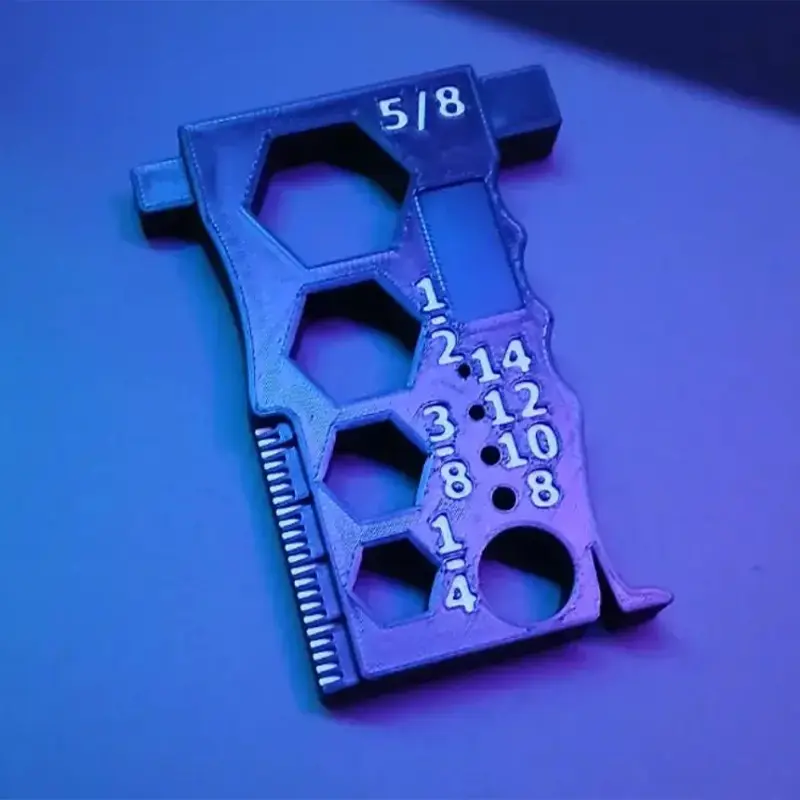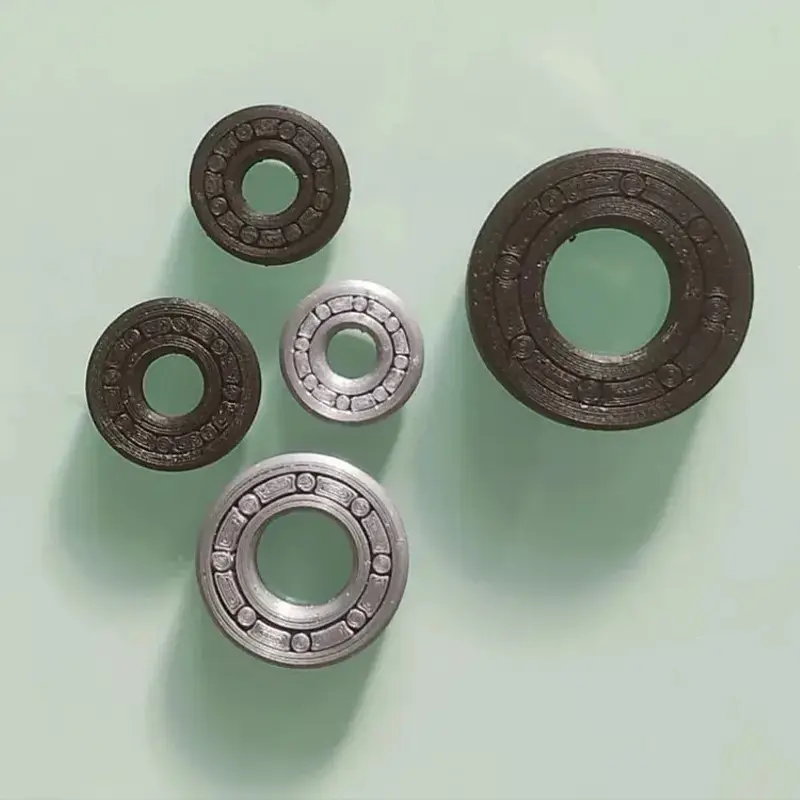
Have you ever held a beautiful, pristine prototype that looked exactly like the final product—only to watch it crack under the slightest pressure during testing? It’s like building a sports car with a cardboard engine: it might turn heads in the showroom, but it’s not going to win any races. For decades, prototyping has been haunted by this divide between form and function. But what if you could bridge that gap? What if your prototype could not only look like the final product but also perform like it? This is the transformative power of functional FDM prototyping. It’s not about creating models; it’s about building validation tools that behave, endure, and perform under real-world conditions. Let’s explore how Fused Deposition Modeling is revolutionizing the product development cycle by creating works-like prototypes that slash time-to-market and de-risk innovation.
Why Settle for Pretty When You Can Have Functional? The Power of Works-Like Prototypes
In the race to market, a prototype that only looks good is a liability disguised as an asset. It gives you a false sense of security, masking critical design flaws that only reveal themselves during expensive late-stage testing or, worse, after launch. A works-like prototype, however, is your first line of defense against catastrophic failure. It’s the difference between a sketch and a blueprint; one inspires, while the other instructs.
The High Cost of Ignoring Functionality in Early-Stage Prototyping
Consider the domino effect of a non-functional prototype. A design team approves a housing based on a visually perfect model, only to discover during assembly that the screw posts are too weak to handle vibrational stress. The entire production line grinds to a halt. Tooling must be modified, schedules are blown, and budgets evaporate. This scenario plays out countless times in traditional prototyping workflows. The root cause? A fundamental disconnect between aesthetics and mechanics early in the design process. Functional FDM prototyping eliminates this disconnect by allowing you to test the mechanics alongside the form.
How FDM Transforms Prototypes from Decorative Models to Functional Tools
FDM doesn’t just build shapes; it builds performance. By using engineering-grade thermoplastics, the same families of materials used in injection molding, FDM produces parts that can be stressed, assembled, heated, and tested. This capability transforms your prototype from a showpiece into a critical analytical tool. You can now answer crucial questions much earlier: Will this latch hold after 10,000 cycles? Will this bracket warp at operating temperature? Will these components fit and function together seamlessly? This is the core of functional FDM prototyping services—it provides data-driven confidence, not just visual approval.
The Engine of Reality: How FDM Technology Builds Functional Parts That Work
The magic of functional FDM lies in its elegant yet powerful process. It’s a layer-by-layer approach to building reality, turning digital designs into tangible, testable objects.
Material Intelligence: Selecting Thermoplastics That Mimic End-Use Performance
The choice of material is where functional prototyping truly separates itself from cosmetic modeling. Instead of being limited to brittle resins, FDM offers a portfolio of industrial-grade thermoplastics. Need a part that can withstand impact? ABS is your champion. Designing a component that will face constant friction? Nylon offers exceptional wear resistance. What about a housing for an engine compartment that gets hot? Polycarbonate can take the heat. This material intelligence means your prototype isn’t just a placeholder; it’s a high-fidelity simulation of the final part, allowing for accurate thermal, chemical, and mechanical testing long before you commit to mass production tooling.
Precision Engineering: When Tolerance and Accuracy Are Non-Negotiable
A prototype is useless if it doesn’t fit. Industrial FDM systems are calibrated for precision, consistently holding tight tolerances that allow for real-world assembly testing. This precision ensures that the gears you print will mesh, the shafts will rotate, and the housings will snap together. It’s this relentless focus on dimensional accuracy that enables engineers to validate not just the design, but the entire assembly process, identifying interferences and fit issues when they are cheap and easy to fix.
Beyond the Bench: Real-World Applications of Functional FDM Prototypes
The proof of functional FDM’s value is visible across every industry that relies on physical products. It’s where theoretical designs meet the unforgiving test of reality.
Automotive and Aerospace: Testing Under Extreme Conditions
In these sectors, failure is not an option. Automotive engineers use FDM to produce functional intake manifolds for engine testing, validating airflow and thermal performance. Aerospace teams create ductwork and brackets that must survive vibration, temperature extremes, and pressure changes. By printing these components in high-performance materials like ULTEM or PEKK, they can conduct rigorous functional tests that mirror real-world conditions, ensuring safety and performance while saving months of development time.
Medical Devices: Saving Lives with Patient-Specific Prototypes
In medical device development, functional prototyping can be a matter of life and death. Surgeons use FDM to create patient-specific bone models from CT scans to practice complex procedures. Device manufacturers prototype surgical tools and implantable device housings, testing them for ergonomics, biocompatibility, and sterility. This ability to create functional, patient-specific models accelerates innovation and improves surgical outcomes, demonstrating that FDM’s impact goes far beyond the factory floor.
Consumer Products: Iterating at the Speed of Market Demands
In the fast-paced world of consumer goods, getting to market first is a colossal advantage. Companies use functional FDM prototypes to test the durability of a new power tool housing, the actuation force of a button on a remote control, or the waterproof seal of a smartwatch case. This allows for rapid iteration based on real functional feedback, not just aesthetic preference. Designers can test a dozen variations of a hinge in the time it would traditionally take to produce one, ensuring the final product is not only beautiful but also durable and user-friendly.
The Yuesun3D Advantage: Your Partner in Precision Functional Prototyping
Achieving this level of functional fidelity requires more than just a printer; it requires expertise. This is where a partnership with Yuesun3D becomes a strategic advantage. Our approach to FDM prototyping is built on a foundation of engineering consultation. We don’t just print your file; we analyze your design for manufacturability, recommend the ideal material for your application, and optimize print parameters to achieve the mechanical properties you need. Our access to industrial-grade equipment and advanced materials ensures that your works-like prototype will be a reliable predictor of final product performance, de-risking your development process and accelerating your path to market.
Conclusion: Stop Prototyping, Start Validating with FDM
The era of the prototype as a mere visual aid is over. Today, FDM prototyping offers a direct path to functional validation, empowering engineers and designers to create parts that work as hard as they look. It transforms the prototyping phase from a cost center into a value engine, identifying problems early, inspiring confidence, and paving the way for successful product launches. Don’t just prototype your next product—validate it. Embrace the power of functional FDM and turn your designs into realities that perform.
Frequently Asked Questions (FAQs)
Q1: How strong are FDM prototypes compared to injection-molded parts?
A1: While injection-molded parts are isotropic (equally strong in all directions), FDM parts can exhibit anisotropic properties. However, with the right material selection (like Nylon or PC), optimal print orientation, and advanced slicing settings, FDM parts can achieve mechanical strength that is more than sufficient for functional testing and many end-use applications. The key is to partner with an expert who can optimize the process for strength.
Q2: Can FDM prototypes really be used for functional testing like drop tests or thermal cycling?
A2> Absolutely. This is a primary advantage of functional FDM prototyping. Engineering-grade thermoplastics like ABS, Polycarbonate, and advanced composites are specifically chosen for their mechanical and thermal properties. They can withstand significant functional testing, providing valuable data on how a design will perform under stress, impact, or temperature variations.
Q3: What is the typical lead time for receiving a functional FDM prototype?
A3> Lead times are remarkably fast. For a typical part, you can go from a digital CAD file to a functional prototype in your hands within 3-5 business days. This rapid turnaround is a game-changer for iterative design, allowing you to test, refine, and retest in a fraction of the time required by traditional methods.
Q4: Are there size limitations for functional FDM prototypes?
A4> Industrial FDM printers have substantial build volumes, capable of producing parts measuring up to 600mm x 600mm x 600mm or larger. For components that exceed these dimensions, expert providers can often design the part to be printed in segments and assembled with techniques that maintain structural integrity.
Q5: How do I prepare my design for a functional FDM prototype?
A5> The best starting point is a 3D CAD file in a format like STEP or STL. For optimal results, consider designing for additive manufacturing (DfAM) by incorporating features like fillets to reduce stress concentration and adequate wall thickness for strength. A service provider like Yuesun3D can provide a full design analysis to ensure your model is optimized for both printing and function.