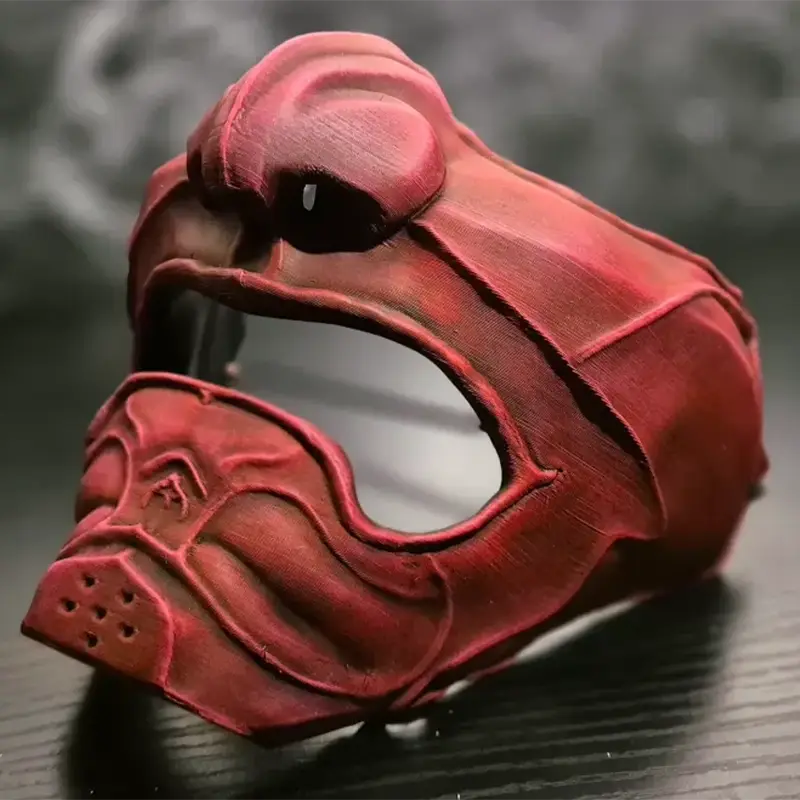
Are you tired of choosing between speed, strength, and cost when sourcing parts? What if you could have all three? In the world of modern manufacturing, Expert FDM Services are shattering old compromises, offering a path to incredibly durable components without the jaw-dropping price tag. This isn’t the 3D printing you might remember from a science fair; this is industrial-grade Fused Deposition Modeling, a technology that has matured into a cornerstone of agile production. Whether you’re an engineer validating a new design or a procurement manager sourcing functional fixtures, understanding how to leverage professional FDM services is no longer a niche skill—it’s a strategic advantage. Let’s peel back the layers and discover how this technology delivers parts that are tough on performance and gentle on your budget.
Why FDM Services Are Revolutionizing Manufacturing Today
Imagine a manufacturing process that requires no custom molds, no expensive tooling, and minimal setup time. That’s the fundamental promise of FDM. While the concept of melting plastic and building an object layer by layer sounds simple, the execution in an industrial context is where the real magic happens. It’s the difference between a hand-drawn sketch and a architectural blueprint; both use lines, but the precision, intent, and outcome are worlds apart.
The Simple Genius of Fused Deposition Modeling
At its heart, FDM is beautifully straightforward. A digital design is sliced into thin horizontal layers. A spool of solid thermoplastic filament is fed into a printer, melted in a print head, and precisely deposited onto a build platform, where it instantly cools and solidifies. The print head moves like a robotic architect, laying down one cross-section after another until the physical part is complete. This additive approach is the antithesis of traditional subtractive methods like CNC machining, which carve away material from a larger block, often wasting over half of it. FDM builds exactly what you need, using only the material required, which is a core reason for its cost-effective FDM services.
Beyond Hobbyism: What Industrial FDM Really Delivers
It’s crucial to distinguish desktop 3D printing from industrial FDM services. The latter uses machines that are workhorses—featuring enclosed, temperature-controlled chambers to prevent warping, advanced extruders that handle high-performance materials, and sophisticated software that ensures incredible layer adhesion and dimensional accuracy. These aren’t toys; they are precision instruments capable of producing parts with tolerances as tight as ±0.1 mm, making them suitable for functional testing and end-use applications in demanding fields like aerospace, automotive, and medical devices.
The Unbeatable Value Proposition: Durability Meets Affordability
The most compelling argument for FDM is its ability to deliver high value at a low total cost of ownership. How does it achieve this seemingly impossible balance?
Cutting Costs, Not Corners: The Economics of FDM
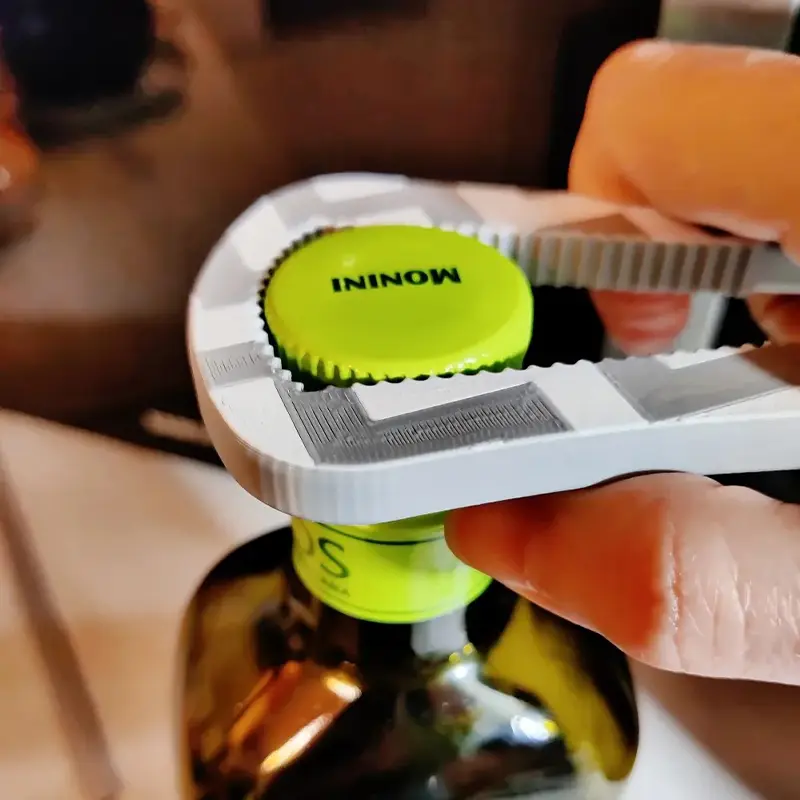
One of the highest-return applications of FDM involves creating custom manufacturing aids. Factories use FDM to produce jigs that hold parts during assembly, fixtures that ensure precise welding, and custom tools that improve worker ergonomics and accelerate operations. Engineers can design, print, and deploy these aids in a fraction of the time and cost of metal alternatives, and they can easily modify the tools as production needs change. This specific application frequently generates a return on investment that justifies the entire FDM capability.
Built to Last: Engineering Durability into Every Layer
But affordability means nothing if the part breaks under pressure. This is where the “expert” in expert FDM services comes in. Industrial FDM doesn’t use brittle, low-grade plastics. It employs engineering-grade thermoplastics like ABS, Nylon, and Polycarbonate—the same families of materials used in car interiors, electronic housings, and various consumer products. When printed with the correct parameters on professional equipment, these materials produce parts with excellent mechanical strength, thermal resistance, and chemical stability. They are anything but fragile; they are workhorse components designed for real-world functional testing and long-term use.
The Material World: Engineering-Grade Thermoplastics at Your Command
The versatility of FDM is largely thanks to its expansive material library. Choosing the right filament is like choosing the right alloy for a metal part—it determines the component’s personality and capability.
Choosing the Right Filament for Your Application
The selection process isn’t guesswork; it’s a deliberate match between material properties and application requirements. Ask yourself: Does the part need to be stiff or flexible? Will it face high temperatures? Does it need to be lightweight or have a specific certification? The answers guide the choice.
From PLA to PEEK: A Spectrum of Performance
On one end, you have materials like PLA, great for conceptual models where appearance is key. Then you have ABS, a staple for functional prototypes thanks to its good strength and durability. Move up the ladder and you find PETG, which offers superior toughness and chemical resistance, making it ideal for liquid containers or mechanical parts. Nylons provide excellent impact resistance and flexibility, while Polycarbonate (PC) can withstand high temperatures. At the pinnacle are high-performance materials like PEEK and ULTEM, which offer incredible strength, thermal stability, and meet stringent flame, smoke, and toxicity standards for aerospace and medical applications. An expert service partner will help you navigate this landscape to find the most cost-effective and high-performing material for your specific need.
Where Expert FDM Services Make the Difference: Real-World Applications
This technology isn’t confined to R&D labs. It’s solving real business problems across industries every single day.
Functional Prototyping: Test Smarter, Launch Faster
This is where FDM shines brightest. Instead of waiting weeks for a machined prototype, engineers can have a functional, durable part in their hands in days. They can test for form, fit, and function—assembling components, checking clearances, and even performing basic mechanical and thermal tests. This rapid iteration cycle compresses development timelines, allowing companies to bring better products to market faster and more efficiently.
End-Use Parts: When FDM is the Final Answer
For certain applications, the prototype is the product. FDM services are increasingly used for final part production, especially for low-volume, custom, or legacy components where injection molding is economically unviable. Think of a custom bracket for a specialty machine, a unique housing for a limited-run electronic device, or a replacement part for equipment that is no longer in production. The ability to produce durable end-use parts on demand revolutionizes inventory management and supply chain resilience.
Jigs, Fixtures, and Tooling: The Unsung Heroes of Efficiency
Creating custom manufacturing aids represents one of the highest-return applications of FDM technology. Factories employ FDM to produce jigs that secure parts during assembly, fixtures that guarantee precise welding, and custom tools that enhance worker ergonomics and accelerate operations . Engineers can design, print, and deploy these aids in a fraction of the time and cost required for metal alternatives, and they readily modify the tools as production needs evolve . This specific application frequently generates a sufficient return on investment to justify the entire FDM capability.
The Yuesun3D Advantage: Your Partner in Precision FDM
Not all service providers are created equal. Achieving truly durable and cost-effective results requires more than just a printer; it requires expertise. This is where a partner like Yuesun3D provides immense value. They bring a depth of knowledge in Design for Additive Manufacturing (DfAM), meaning they can optimize your part for strength, printability, and cost right from the start. They operate industrial-grade machines that offer repeatable accuracy and handle advanced materials. Perhaps most importantly, they provide rigorous quality control, inspecting each batch to ensure it meets strict tolerances and performance standards. Partnering with an expert transforms FDM from a simple printing service into a strategic manufacturing solution.
Conclusion: Building Smarter with Expert FDM Services
The narrative around manufacturing is changing. The old trade-offs between cost, speed, and quality are being rewritten by technologies like expert FDM services. By leveraging this accessible yet powerful technology, businesses can de-risk product development, create agile supply chains, and produce parts that are both tough and affordable. It empowers innovation at a pace and scale that was previously unimaginable. In a competitive landscape, the ability to quickly create durable, functional components is a superpower. Don’t just make parts; build smarter.

Frequently Asked Questions (FAQs)
Q1: How durable are FDM parts compared to injection-molded parts?
A1: With the right material and printing parameters, FDM parts can be exceptionally durable and suitable for many functional applications. While injection-molded parts are isotropic (equally strong in all directions), FDM parts can be anisotropic, with layer adhesion being a potential weakness. However, expert services optimize print orientation and settings to maximize strength. And for many low-to-medium stress applications, the performance is comparable at a fraction of the tooling cost.
Q2: What is the typical lead time for receiving FDM parts?
A2: Lead times are a key advantage. For most projects, expert services can deliver parts within 3-5 business days. This includes printing and post-processing. This rapid turnaround is possible because there is no tooling or setup required, allowing for a near-instant transition from a digital file to a physical part.
Q3: Can FDM parts withstand outdoor or high-temperature environments?
A3: Yes, if you select the appropriate material. Standard PLA is not suitable, but materials like ASA offer excellent UV resistance for outdoor use, and Polycarbonate or ULTEM can withstand high temperatures, making them suitable for automotive under-hood applications or electronic enclosures. An expert service can guide you to the right material for your environmental conditions.
Q4: Are there size limitations for parts made with FDM services?
A4: Industrial FDM printers offer substantial build volumes, often producing parts up to 400mm x 400mm x 600mm or larger. For parts exceeding these dimensions, expert providers can design the component as separate segments. They then assemble these parts post-production using techniques that create a strong, seamless bond.
Q5: How does the surface finish of FDM parts compare to other methods?
A5: Straight off the printer, FDM parts have visible layer lines. This is their characteristic look. However, expert services offer a range of post-processing options—including sanding, priming, painting, and vapor smoothing—that can achieve a very smooth, high-quality surface finish suitable for consumer-facing products or aesthetic prototypes. The desired finish is a choice that balances cost, time, and application needs.